


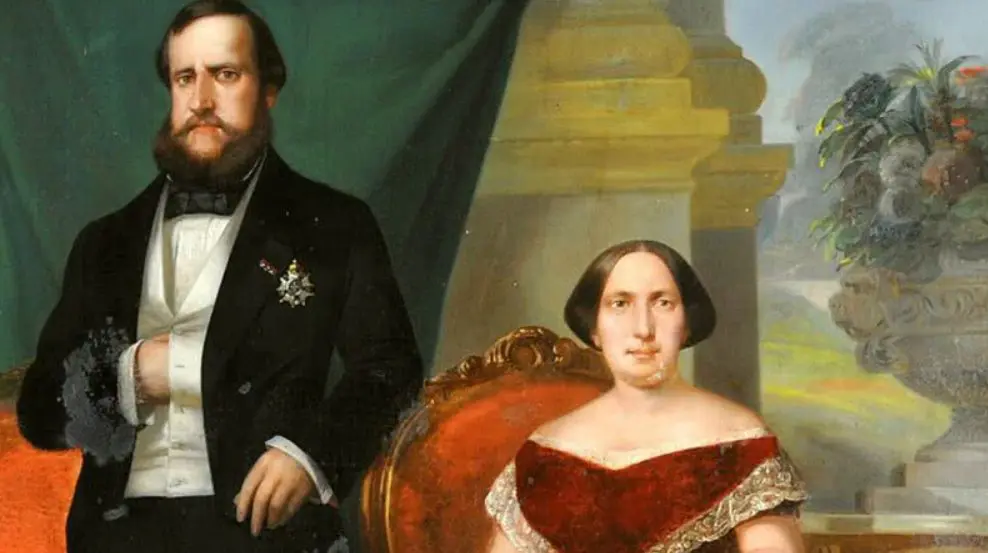
Until this first quarter of the 21st century, Brazil believed it had experienced every form of government, from those already tested worldwide to bizarre native inventions. Since the country was discovered, there has been a bit of everything. The first in command were the proprietors of stillborn hereditary captaincies. Then came the sole Governor-General, the pair of Governors-General (one ruling the South, the other the North), and the Viceroy. With the arrival of the Portuguese Court, the colony became a kingdom, and the dementia of Queen Maria I, the Mad, transferred absolute power to Prince Regent João VI. The proclamation of Independence resulted in the adoption of a monarchical regime, but D. Pedro I soon distanced himself from Brazil to secure the Portuguese throne for a daughter. He left behind a considerable problem: at five years old, his successor would have to wait another 13 years to reach the age of majority required by tradition.
The kingdom’s grandees decided to bide their time with a regent at the helm. Under the pretext that Father Feijó, the incumbent, was becoming too overbearing, they replaced the sole regency with a triple regency. As this idea also failed, the successor’s majority was anticipated, and D. Pedro II became emperor at 14. He contained frequent regional revolts, won the Paraguayan War, and was aging peacefully when a monarchist general, Deodoro da Fonseca, decided to proclaim the Republic. The emperor would be replaced by presidents — chosen by the majority of the electorate or benefiting from brazen frauds — who, in the following decades, would alternate with civilian dictators, military juntas, generals anointed by the Armed Forces’ high command, and, after the 1988 Constitution, candidates victorious at the polls.
Receba nossas atualizações
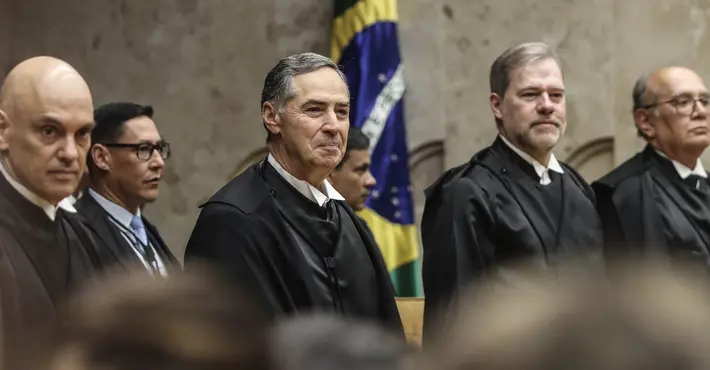
In terms of forms of government, ‘nothing else was missing,’ millions of Brazilians, weary of risky experiments, sighed. They were wrong: what was missing was to house a man who never read a book and couldn’t write in the Alvorada Palace, and then the woman who, in five and a half years, couldn’t string a coherent sentence together. That’s no small feat. But it pales in comparison to the most bizarre and disastrous form of government ever tested in these parts: the dictatorship of the Judiciary. Entrenched in the Supreme Federal Court (STF), the high command consists of law graduates nominated by executive chiefs with legislative approval. Divided into two categories — the incapable and those capable of anything — they morph into Super-Judges when they don black robes. The senior justice, Gilmar Mendes, is the coach of the Timão da Toga (‘Robe Super-Team’). The star player is Alexandre de Moraes, who acts according to legal codes existing only in his own head and dreams of turning the country into a gigantic jail.
“I run a criminal court that handles two thousand cases,” Moraes boasted in a speech to his captive audience. In this multitude of defendants and suspects, there isn’t a single devotee of Lula nor any kind of leftist. Only those who insist on doubting the justice’s accusations against Jair Bolsonaro lie, sin, and violate some imaginary law. The justice crosses himself when he thinks of his favorite Satan. How can one not punish a genocidal, fascist, coup plotter, jewel thief, and whale harasser, among other things, with 27 years in prison? How can one not see a villain in someone who dares to demonstrate in the streets in favor of amnesty? No one knows exactly how many inquiries Moraes manages. But it is known that there are enough cells and electronic ankle monitors to confiscate the right to come and go even from the lipstick lady, the autistic beggar, and septuagenarians armed with rosaries.
The Supreme Court used to be compared to an archipelago of 11 islands with no communication between them. An exaggeration, of course. But the beginning of TV Justiça broadcasts confirmed that plenary sessions bore no resemblance to debates in the House of Lords. Decisions were preceded by debates that often devolved into shouting matches, entirely unbecoming of ceremonial treatment. The insults clashed with the protocolary “Your Excellency” or “Eminent Colleague” that prefaced the offensive phrases. In 2012, for example, at the epilogue of the Mensalão trial, Joaquim Barbosa advised “eminent justice” Gilmar Mendes not to treat him “as if he were speaking to one of his henchmen in Mato Grosso.” The current senior justice of the STF, incidentally, is a vocational brawler. Annoyed by a dissenting vote from Nunes Marques, he repeatedly uttered the phrase, “There will be no salvation for the cowardly judge.”
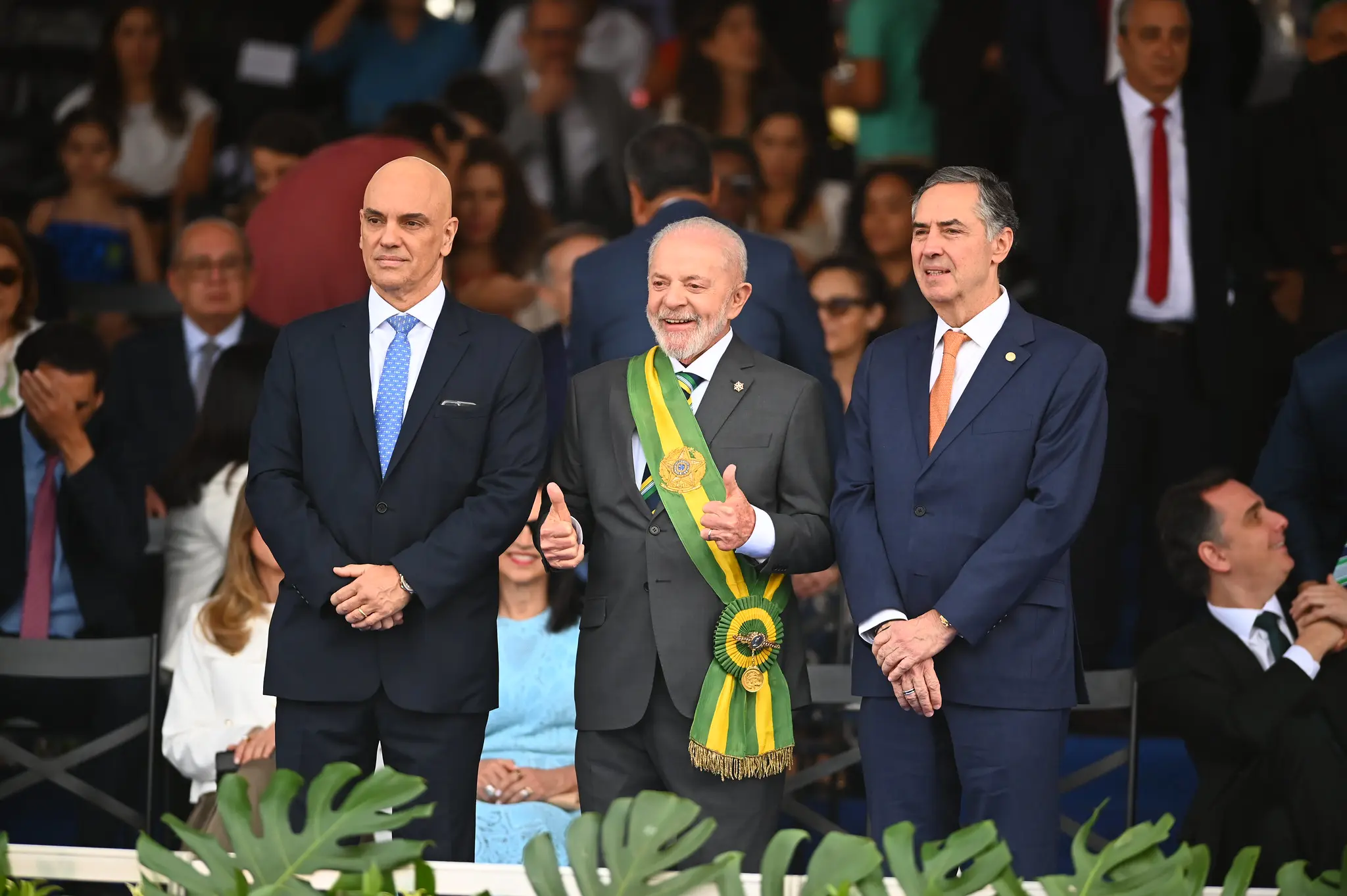
This belligerent temperament exposes him to particularly rude retorts. One of them, delivered by Luís Roberto Barroso in 2018, still enjoys success on social media: “Keep me out of your bad feelings. You are a horrible person. A mix of evil with backwardness and touches of psychopathy. What is your idea? What is your proposal? None! It’s bile, hatred, ill will, a secret evil, a horrible thing. Your Excellency shames us, Your Excellency is a disgrace to the court, a disgrace to all of us. An aggressive, coarse, rude temperament. This is terrible. Your Excellency demoralizes the Court. It is very painful for all of us to have to live with Your Excellency here. You have no ideas, no patriotism; you are always after some interest other than justice. A shame, an embarrassment.” If there ever was a counter-attack from Gilmar, TV Justiça did not broadcast it.
8.Em março de 2018, durante uma sessão no STF, o ministro Luís Roberto Barroso explodiu contra Gilmar. Chamou-o de “uma pessoa horrível”, “mistura do mal com o atraso e pitadas de psicopatia”. A discussão foi transmitida ao vivo e escancarou o clima tóxico no Supremo. Barroso… pic.twitter.com/LZbsAjwpon
— Lopez (@Zack_lope) June 20, 2025
In 2023, during Barroso’s inauguration as president of the STF, reciprocal verbal caresses signaled that the antagonists of 2018 had become good friends. “Destiny could not have been more generous to our Republic,” Gilmar began. “Your Excellency’s inauguration as president of this Supreme Court represents an award that crowns a legal career of excellence.” Barroso cast aside the touches of psychopathy: “I gratefully acknowledge your beautiful prayer on behalf of the Court and the generous words addressed to me, which I will cherish.” The majority of the STF is against any type of amnesty — for alien enemies. Among the members of the Court, there is plenty of compassion. The islands must be brought together to strengthen the dictatorship of the Judiciary.
Cármen Lúcia gained the sympathy of the hegemonic bench thanks to a conversion as radical as that experienced by Saint Paul the Apostle on the road to Damascus. The woman who once recited “’’Shut up’ already died” began to defend censorship with an expiration date and now wants to muzzle platforms. “It is necessary to prevent 213 million small sovereign tyrants from dominating digital spaces in Brazil,” she raved, reducing all inhabitants of the country to small tyrants. “I co-opted Cármen Lúcia,” Gilmar Mendes boasted at a dinner in Cuiabá. After appointing herself the senior justice’s adopted daughter, Cármen speaks with him daily. Without witnesses nearby.
Before her conversion, I heard the then-president of the STF swearing to judge Sérgio Moro, at an event in São Paulo, that she wouldn’t even put to a vote the law authorizing the beginning of sentence enforcement after a second-instance conviction. She did more than forget the promise: she voted in favor of the change championed by Gilmar. Now, someone is only considered guilty after the last appeal to the last instance has been rejected. It was thanks to this cunning that Lula got out of jail, where he had been resting for 500 days. To continue expanding the powers of the Judiciary, the black-robed conspirators needed a candidate with a chance to prevent Bolsonaro’s re-election. They needed a Lula.
The author of the historic vote that imploded the monument to fantasy, Luiz Fux, bled the poisoned tree planted on March 14, 2019, right at the beginning of the Bolsonaro administration. On that day, the then-president of the STF, Dias Toffoli, opened ex officio — without a request from the Public Ministry, the police, or any interested party — Inquiry 4.781, also known as the ‘Fake News Inquiry’, nicknamed the ‘Doomsday Inquiry’ by retired justice Marco Aurélio Mello. Also in defiance of the court’s rules, which stipulate that cases are assigned via drawing, Toffoli handed Alexandre de Moraes the position of reporting justice for the inquiry, initiated “with the objective of investigating the existence of fraudulent news (fake news), slanderous denunciations, and threats against the Court, its justices, and their families.” Less than a month later, on April 11, 2019, Crusoé magazine published excerpts of the testimony in which Marcelo Odebrecht, a whistleblower in Operation Lava Jato, revealed the codename used to refer to Dias Toffoli within the construction company: “my father’s friend’s friend.”
Three days later, Alexandre de Moraes ordered the websites Crusoé and O Antagonista — which had also publicized the discovery — to remove the published material to avoid a daily fine of R$ 100 thousand. The negative repercussions caused the black-robed censors to retreat. But the counteroffensive was not long in coming. On April 29, 2020, reporting justice Moraes suspended the appointment of Alexandre Ramagem to head the Federal Police, alleging that Bolsonaro intended to use an institution that is not a government intelligence agency to obtain information illegally. The president made the mistake of ‘blinking first’. Moraes advanced without solid resistance until the emergence of Vaza Toga (‘Robe Leaks’). Some weeks ago, former subordinate Eduardo Tagliaferro released evidence of the criminal methods used by the justice and an auxiliary judge to fabricate evidence to incriminate innocent people. While the fierce inquisitor avoids commenting on the case and continues to hunt for reasons to punish the witness who is bringing the truth to light, he is the one who needs an alibi.
In 2024, when she commanded the Superior Electoral Court (TSE), Cármen Lúcia understood that it would be impossible to replicate her predecessor’s performance in Brazil’s more than 5,500 municipalities. In 2022, Moraes had broken the Brazilian record for abuse of power with illegal actions designed to inhibit, constrain, intimidate, or punish media outlets, journalists, candidates, and businessmen who would not bend to warnings and threats. The STF and the TSE acted as political parties and strongly influenced the results of the dispute. How to repeat such crimes in thousands of Brazilian municipalities? Better to leave electoral issues to local city judges. The result: the vote count was completed peacefully; the most voted candidates were elected and would take office without turmoil. The change for the better was due to the retreat of the two courts that had disrupted previous elections. This example alone is enough to identify those responsible for the legal and political insecurity plaguing Brazil. The country will only return to normalcy when the Supreme Court relearns to respect the law. The crisis wears a black robe.























Entre ou assine para enviar um comentário.
Você precisa de uma assinatura válida para enviar um comentário, faça um upgrade aqui.