

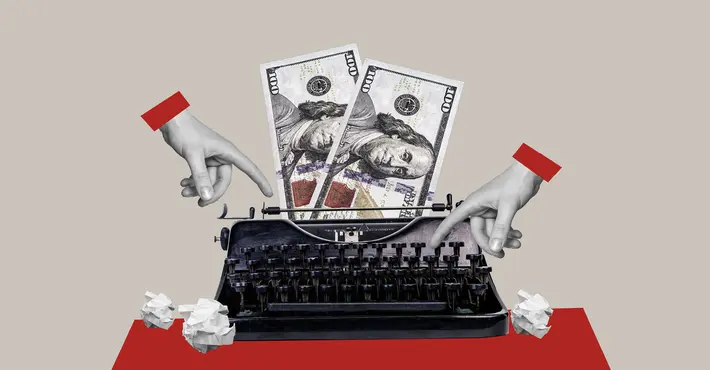
In early August, former U.S. State Department official Mike Benz dropped a bombshell in the Brazilian Senate, presenting evidence of actions undertaken by Washington, under the Biden administration, to interfere in Brazil’s 2022 elections. From USAID to the CIA, including NGOs like the Atlantic Council, Benz’s testimony before the Committee on Foreign Relations and National Defense exposed a network that guided and financed a web of partners in Brazil, comprising fact-checking agencies and various NGOs, all with the explicit aim of censoring conservatives. Millions of Brazilians, still relying on the news show Jornal Nacional for their news, remain blissfully unaware of the allegations that USAID — the U.S. Agency for International Development — funneled U$ 90 million into Brazil through various initiatives designed to “instrumentalize information control” during Jair Bolsonaro’s term.
Also in the Senate, before the very same committee, Eduardo Tagliaferro, the former head of the Special Advisory for Combating Disinformation (AEED) and a recognized expert, testified and presented proof of the abuses and illegalities perpetrated by the office of the president of the Superior Electoral Court (TSE) in 2022, Alexandre de Moraes. In one of his most damning revelations, Tagliaferro, now a refugee in Italy, detailed how he himself, acting under direct orders from Moraes’s office, engaged in procedural fraud. This occurred in the case of eight businessmen who faced search and seizure warrants in August 2022 — an operation rife with illegalities, as reported by Oeste.
Receba nossas atualizações
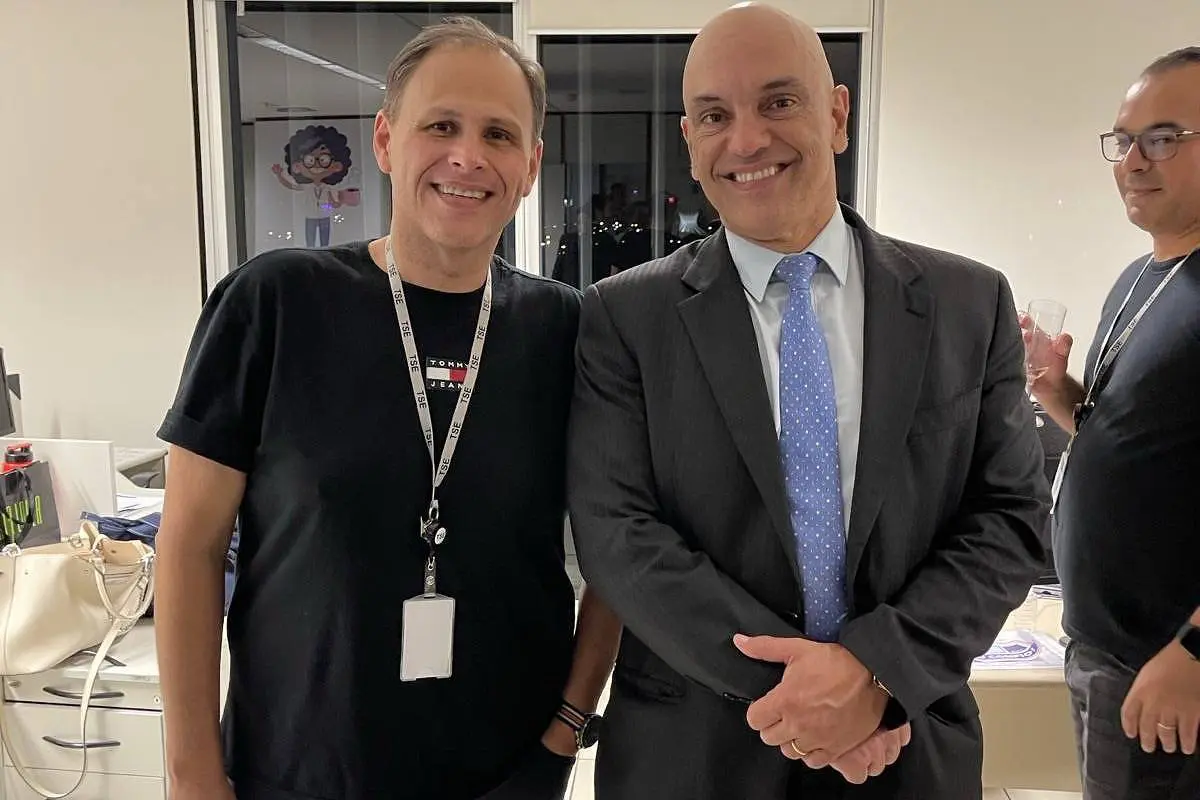
For Brazil’s leading television newscast, this is evidently a non-story, a matter of no consequence. Perhaps Moraes’s former advisor and now nemesis will only be introduced to Jornal Nacional viewers if he disembarks in Brazil in handcuffs. Moraes has already sought the expert’s extradition from Italy, but to no avail. His other extradition requests, directed at Spain and the United States, have been similarly dismissed.
In both instances, the argument isn’t that the nation’s most prominent TV broadcaster should have amplified these accusations to a fever pitch — as it repeatedly did, with or without basis, during the Bolsonaro administration. Rather, it simply entails covering the facts and presenting diverse perspectives — those of the government, the opposition, the implicated parties, and neutral observers. This is nothing more than what was prescribed in the dustiest style guides from the late 1980s, when Brazil redemocratized and newsrooms began to enshrine, in black and white, the standards of conduct, stylistic norms, and ethical precepts that their professionals were expected to uphold.
But alas, the winds swept away the 1980s, 1990s, and 2000s, leaving us stumbling, amidst a mournful, rainy Ash Wednesday of wretched obscurantism, long after the dazzling carnival of hopes we once placed in journalism as a beacon of liberty and accountability to the people. Do you remember when we chanted “vai passar nesta avenida o samba popular”? Do you recall the banners we carried? “Neutrality.” “Independence.” They all lie shattered on the ground, mingled with the shards of old allegories, like the one that hailed citizen journalism and vowed to scrutinize state abuse and all forms of authoritarianism. What we are experiencing now is a hangover.
An optimist might logically argue that there’s no point complaining about the winds; one must simply adjust the sails. And, if they wish to cast aside their melancholy, they might even cite the robust, indeed bloated, profits that Grupo Globo showcased in its latest annual report. That’s right: by burying news, Brazil’s largest media conglomerate has nothing to complain about. In 2024, it pocketed a net profit of R$ 2 billion. Admittedly, a growing portion of these results stems from “non-operational activities,” which, translated from “finance-speak,” means the Marinho family’s communication empire rakes in cash from ventures entirely unrelated to the content it provides to the public. Squeezing this analysis further, one could argue that financial investments are bloating the organization’s profits. It’s also worth noting that entertainment, for Grupo Globo, remains the primary revenue driver. Even if soap operas no longer command the popular appeal they once did, and even reality shows appear to be a formula nearing exhaustion, these remain assets Globo possesses that other communication groups, particularly those operating regionally, can only dream of.

All caveats aside, it’s still remarkable how a journalistic content company can amass such excellent financial results even while turning its back on half the country. Perhaps “turning its back” is too mild an expression. On January 8, 2023, and even in the days that followed, when the dust of emotionalism should have settled, its outlets continued to brand those arrested with labels such as “coup plotters” and even “terrorists,” failing to differentiate unruly agitators from peaceful protestors, refusing to listen to the abuses reported by desperate lawyers, and, fundamentally, offering not a single word of skepticism or even doubt in the face of the antics perpetrated under the orders of Alexandre de Moraes. What one read in the newspaper, what one saw on TV was the full splendor of officialism. This was precisely what journalists in the 1980s repudiated — the so-called “chapa-branca journalism,” or “government-mouthpiece reporting.” Any self-respecting professional would have shunned this anathema. Today, anchors pride themselves live on-air acting as real-time spokespeople for Supreme Court (STF) justices who, without identifying themselves, attempt to coerce congresspeople into voting, for example, against an amnesty bill that hasn’t even been drafted.
What reflections can possibly be drawn from this astonishing case where a powerful player in “professional journalism” libidinally profits from suppressing news? Many. So many, in fact, that they cannot be contained within this article, nor even in others that might be written — on journalism, on entertainment, on infotainment, on digital media, on hyperlocalism.
But, as a preliminary contribution, I appeal to a popular axiom: “He who pays the piper calls the tune.” It seems to me that independent journalism is facing a seemingly insurmountable funding crisis. And the response most outlets have found is to surrender to sponsorships from special interest groups and, of course, government funding. The case of Globo, regally endowed by the Lula government and its state-owned enterprises, is the most conspicuous example, and it propagates a profoundly detrimental message throughout the market: that pleasing the paymaster is a normal — and worse, unavoidable — path. It is not.
Unless, of course, journalistic enterprises transform themselves into public relations firms, charging their fee to promote a cause, an interest. Journalism truly dedicated to the nation cannot survive within a company that employs journalists but is, in essence, a lobbying agency.
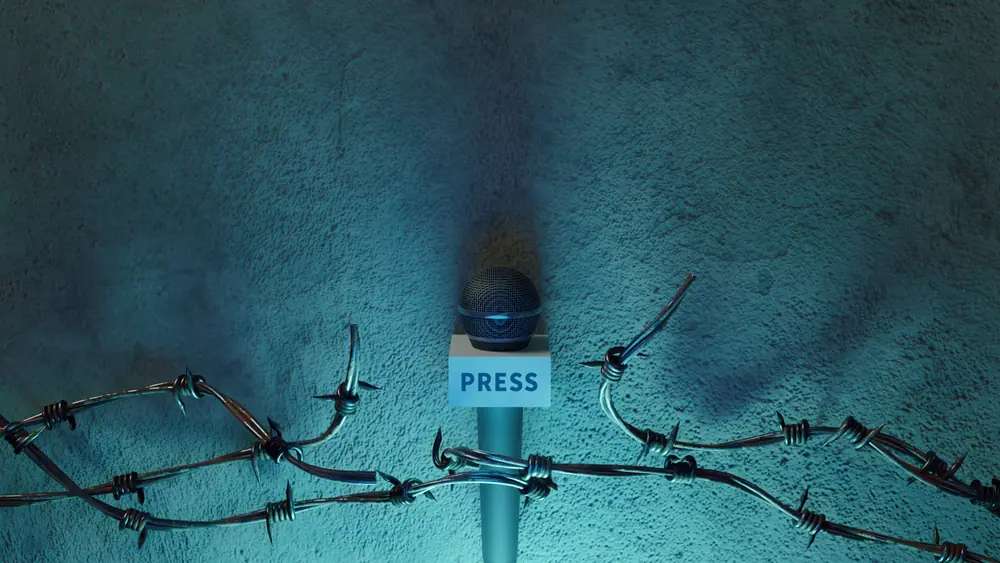
I believe the model to be pursued for financing independent journalism — that is, journalism unshackled from state officialdom and special interests — remains a challenge. Yet, I believe it is both possible and desirable to begin with the definition of a foundational principle. And in this regard, I view with hope this extraordinary human chain stretching from north to south across the country, embracing the call of journalists José Roberto Guzzo, who recently passed away, and Augusto Nunes. Together with businessman Jairo Leal, they founded Revista Oeste in 2020, at the dawn of the pandemic, committing to subsist solely on audience support, refusing any advertising or sponsorship from government or state-owned enterprises.
Another path I envision is a call to philanthropy. From the United States, we have seen examples of men who amassed fortunes and, at a certain point in their lives, made significant donations for creating hospitals and universities. In my view, the press desperately needs rescue before it is irrevocably captured by corporations that divert it from its crucial role in maintaining the health of the nation’s institutions. And the one who can rescue the press is the audience, as long as they feel represented. Additionally, benefactors with sufficient economic backing and altruism to bequeath to posterity a journalistic vehicle founded on principles and with a governance structure designed to weather any storm.
I don’t know if these visions are feasible. But allowing journalism to immolate itself on the altar of a government’s momentary interests, or those of special interest groups, is, for me, not a healthy option.













Entre ou assine para enviar um comentário.
Você precisa de uma assinatura válida para enviar um comentário, faça um upgrade aqui.