

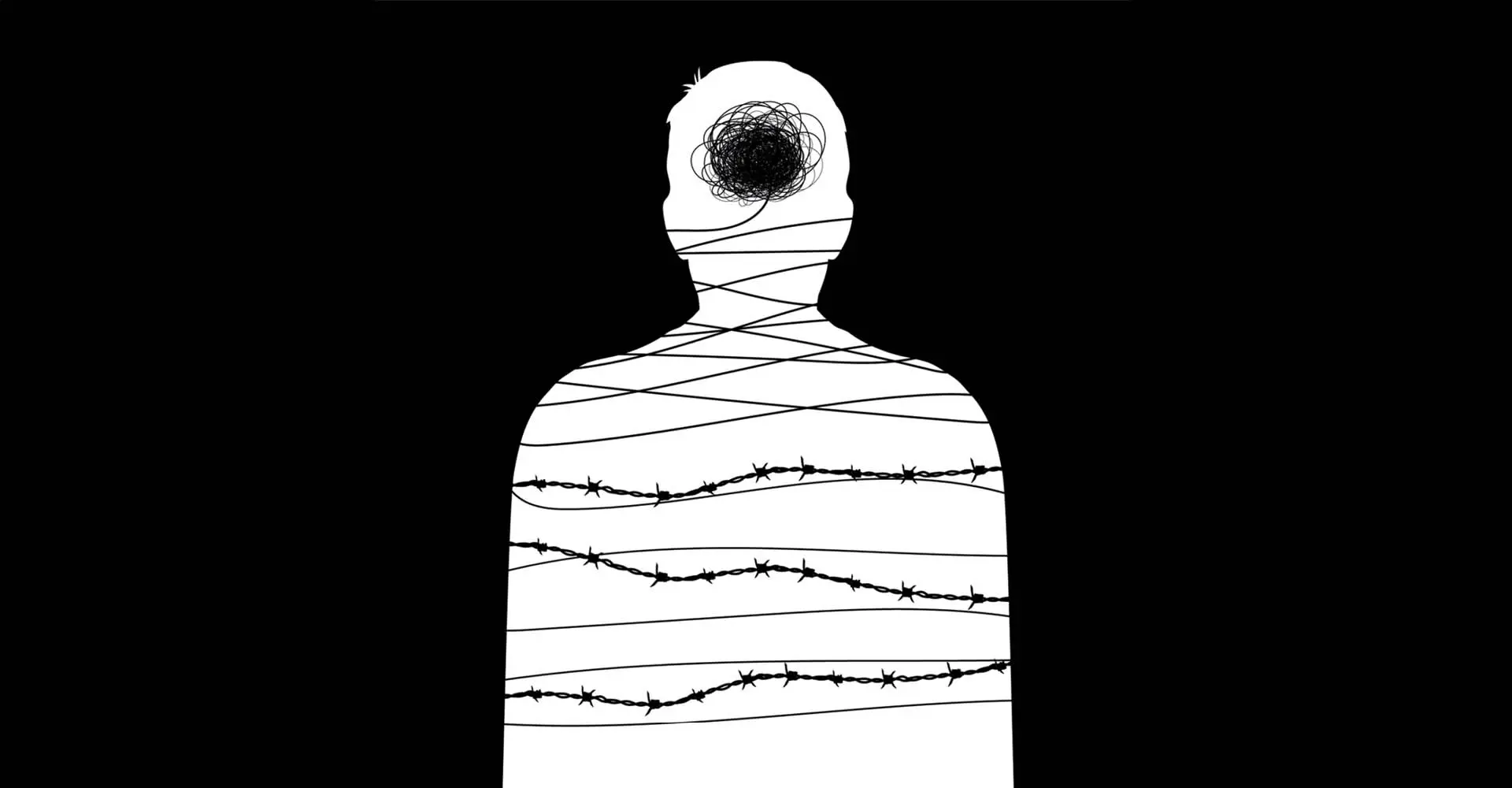
This past Tuesday, the 12th, the United States released a report leveling sharp criticisms against the Lula administration and Supreme Court Justice Alexandre de Moraes. In the document, the U.S. asserted that the human rights situation in Brazil deteriorated in 2024. According to the U.S., “the courts took broad and disproportionate actions to undermine freedom of speech.” Furthermore, the White House stated that the Supreme Court (STF) “undermined democratic debate by restricting access to online content deemed to ‘undermine democracy,’ disproportionately suppressing the speech of supporters of President Jair Bolsonaro, as well as journalists and elected politicians, often in secret proceedings that lacked due process guarantees.” Moreover, the U.S. affirmed that hundreds were imprisoned for January 8 “without filing charges.”
This report corroborates what Oeste magazine has been reporting since January 8, 2023. Aside from the minority who actually destroyed the premises of the Three Powers, the vast majority of people in the protest are innocent. One only needs to look at the profile of those involved: ailing sexagenarians, autistic individuals, single mothers, and even ice cream and cotton candy vendors. All were denied due process, which includes a broad defense and judgment at the first instance. With each passing day, the narrative that Brazil witnessed an attempted coup d’état two years ago crumbles under the weight of facts, especially given the new elements emerging as the trials proceed.
Receba nossas atualizações
Endless Cruelty on January 8
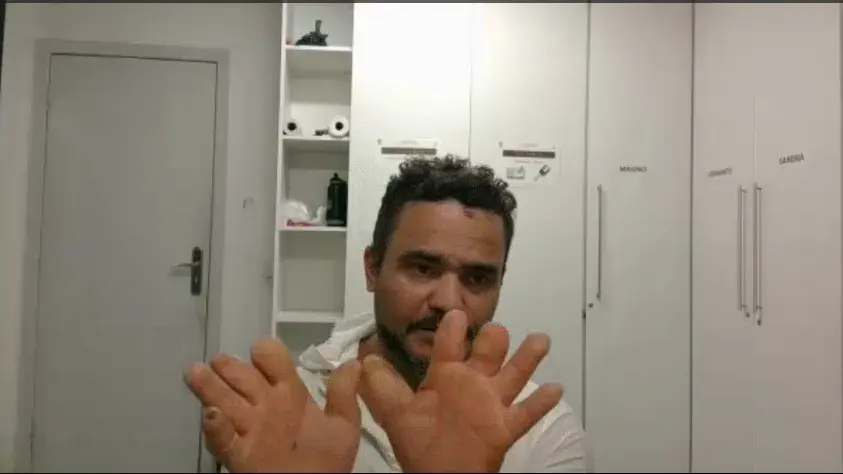
Moraes’s most recent Kafkaesque outrage was the condemnation of yet another “batch” of protesters. Among them, a 47-year-old man suffering from Hansen’s disease (commonly known as leprosy). Davi Torres, a resident of the federal capital, came to the encampments near the Army General Headquarters (QG) in Brasília to sell candies, aiming to supplement his income. A divorced father of six, Torres survives on a permanent disability pension. His financial situation is so dire that he lives at his mother’s house, unable to afford rent.
The day after the destruction, he was detained by police at the QG and spent hours inside a bus with strangers. He was then taken to Papuda Penitentiary. His severe infectious illness did not prevent him from spending two months behind bars, crammed with 13 other prisoners in a tiny cell. Released with an electronic ankle monitor and restrictive measures, he tried to rebuild his life. The device constantly injured him, causing his leg — already covered in leprosy-induced wounds — to swell and itch. Although his defense informed Moraes of this, the STF justice never authorized the device’s removal. Nor did the magistrate accept the lawyers’ justifications regarding violations. Because he sought treatment for his disease in a satellite city of the Federal District (DF), Torres occasionally left the judicial-permitted locomotion area. For this reason, on July 16, the justice ordered the man back to jail, despite his defense reiterating explanations.
“The petitioner is a carrier of leprosy (…) and suffered severe sequelae, as he had fingers amputated from both hands, and his remaining fingers cannot bend due to nerve-damaging lesions,” Torres’s defense reminded, in a frustrated attempt to free the man. “Being relatively poor, he has no financial means to afford medical treatments in private healthcare units and, whenever necessary, seeks public health units in the DF.” Shortly after the defense described Torres’s deplorable situation, the conviction came: one year of detention under house arrest for criminal association (Article 288, caput, of the Penal Code), and a fine of ten minimum wages for incitement to crime (Article 286, sole paragraph, of the Penal Code), for “encouraging the military to take over the country.”
The justice’s pen also showed no mercy to elderly women. A little over a month ago, Moraes revoked the house arrest of homemaker Vildete Guardia, 74, also for alleged violations of cautionary measures. The magistrate ignored the fact that the woman’s ankle monitor had technical issues. Sentenced to 14 years in prison, she was serving her sentence at home and could manage her illnesses at private clinics. Since returning to the Santana Women’s Penitentiary (SP), however, she has been unable to continue treatment for neurological problems developed during her first nine months in closed-regime custody. Vildete also worsened with thrombosis, an ailment that forces her to use a walker in the cell she shares with a common prisoner. Rural producer Paula Felipe, Vildete’s daughter, lamented the situation. “The first time, they sent my mother home in a wheelchair,” she said. “She had episodes of sudden urinary incontinence, which were being investigated, but now everything went down the drain. I don’t know what else to do.”
Retired teacher Iraci Nagoshi, 72, also sentenced to 14 years in prison, had her house arrest suspended. She is in the same prison as Vildete. Unlike the homemaker, Iraci sleeps on the floor and must live with five other women. “The situation is particularly grave, considering that the elderly woman was recovering from femur surgery and, more recently, suffered an elbow dislocation, which drastically reduced her mobility and now causes her intense pain,” her defense stated. “Even more concerning is the fact that, to date, no adequate health treatment has been provided. An urgent medical return visit to assess the elbow injury was scheduled for July 24, 2025, but no steps have been taken to ensure this crucial care. Moraes’s and the Penitentiary Administration Secretariat’s inaction in the face of this emergency is unacceptable and places Iraci’s life at high risk.”
The inaction of the justice’s penal court has prolonged the suffering of another prisoner: Jucilene Nascimento, 62. For a long time, lawyers have requested house arrest for the retiree to care for her health at home. However, their pleas have been ignored. A few weeks ago, Jucilene was beaten in her cell by a common prisoner after the inmate discovered that the elderly woman was involved in the January 8 events. “The aggression resulted in an evident injury in the eye area, constituting an extensive hematoma, whose severity raises serious concerns about the inmate’s safety in the prison environment,” her lawyers said. “The situation demonstrates a lack of minimal personal security conditions for the detainee, who has been coexisting with highly dangerous prisoners, and is thus exposed to concrete risks of new aggressions and irreversible damages.”

For this reason, the lawyers activated the U.S. House of Representatives Human Rights Commission. In the document, they detailed the inhumane conditions of Jucilene’s cell. In addition to non-potable and cold water, she must sleep on a “paper-thin mattress,” denounced the defense, which filed another request for house arrest with the STF.
Sanctions
This week, days after the U.S. report emerged, social movements and lawyers presented a detailed report on prisoner violations to the Inter-American Commission on Human Rights of the Organization of American States. In the document, the signatories requested immediate measures, including an end to arbitrary arrests and a diplomatic manifestation from the international body to “cease the abuses committed by Moraes, under the omission of the Brazilian State and government.”
It bears repeating: no democracy can uphold itself on the pain of innocents behind bars. Justice is not served through humiliation, nor through vengeance in the guise of legality. A country that prides itself on freedom cannot tolerate prison becoming a stage for abuses. It is time to dismantle this machinery that grinds justice in its own name.
Leia também “O tirano do Brasil”









Entre ou assine para enviar um comentário.
Você precisa de uma assinatura válida para enviar um comentário, faça um upgrade aqui.